Rich wildlife
The Bockerek Forest is a favoured nesting area for black storks and is noted for its insects, birds and valuable flora. Peat-moss bogs and rare wetland plants survive in abandoned Tisza channels.
TÁKOS · VÁMOSATYA · BEREG
Entering a water-shaped landscape of woodland, meadows and protected natural values.
TÁKOS · VÁMOSATYA · SZATMÁR-BEREG
Before regulation of the River Tisza, Tákos was surrounded by marshes and oak woodland. North of the settlement lies one of the Bereg plain’s largest remaining continuous woodlands.
The forest forms part of the Szatmár-Bereg Landscape Protection Area. Oak–hornbeam stands alternate with oak–ash–elm groves, willow and alder marshes and alder swamp forest.
The Bockerek nature trail connects the Vámosatya and Tákos area, the protected landscape and the surroundings of Büdy Castle. Access to some woodland requires permission; current conservation rules should be checked before setting out.
The Bockerek Forest is a favoured nesting area for black storks and is noted for its insects, birds and valuable flora. Peat-moss bogs and rare wetland plants survive in abandoned Tisza channels.
Parts of the forest are strictly protected and parts form a forest reserve. Access to some areas requires permission, and visitors should stay alert on designated routes.
The area is a known habitat of the common European adder, including its black colour form. Conservation rules and local guidance must be followed during visits.
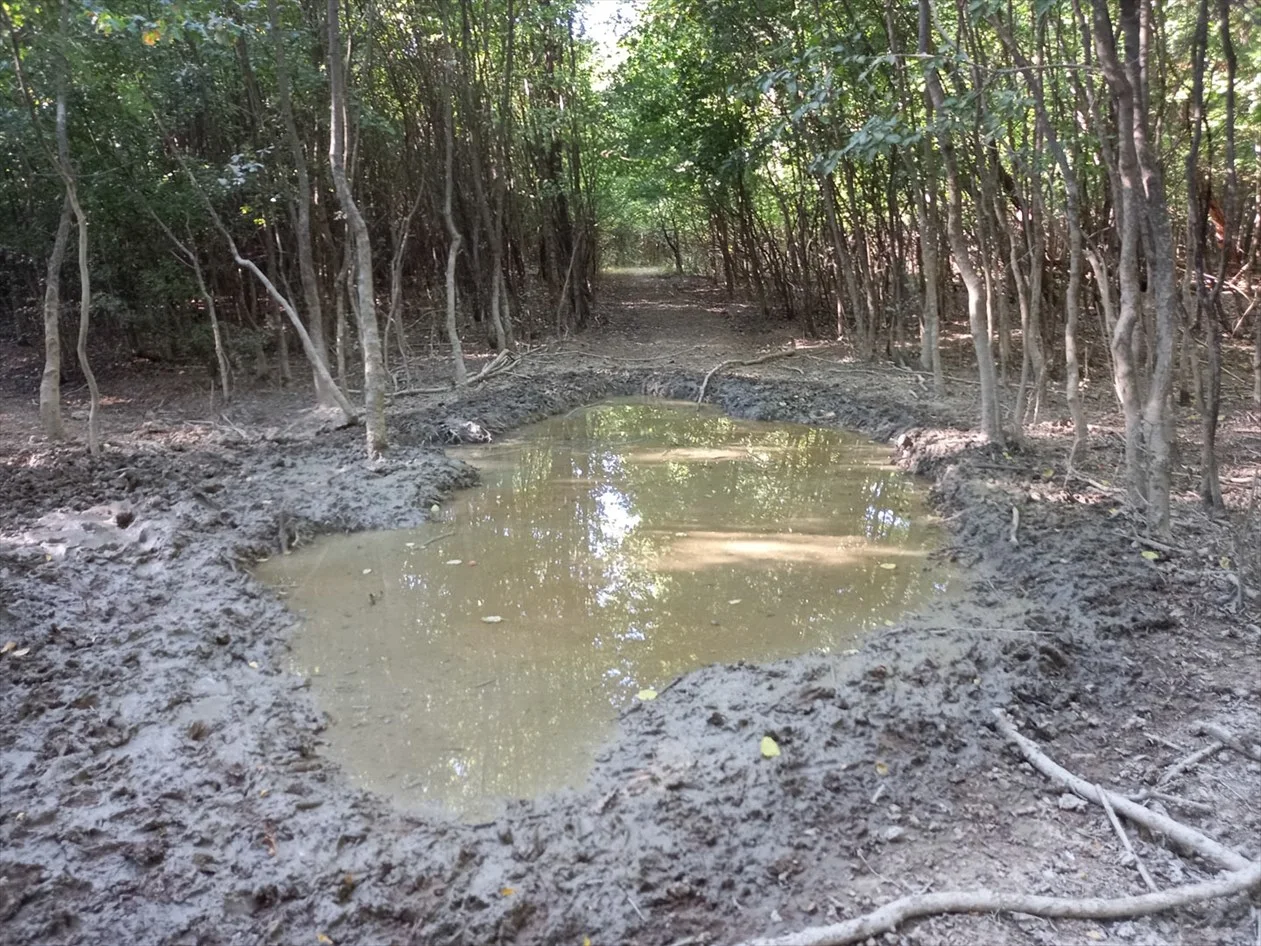
SIGNS OF A WATER-SHAPED FOREST
Wallows are regularly used by wild boar and other wildlife. In Bereg’s water-shaped woodland, the signs around them reveal much about animal movement and the current condition of the ground.
INDICATIVE MAP